
Chronic spontaneous urticaria is a serious condition which affects people in many ways. Although there is no cure for chronic spontaneous urticaria, there are treatments that can control or suppress the hives and swelling.
This page contains a range of resources that will help you to learn more about your condition, how Xolair might work to treat it, and how you can track your symptoms to help measure how well your treatment is working.

Understanding CSU
Urticaria, also known as hives, is characterised by a rash that may appear as blotches or raised red lumps on the skin. People with urticaria may also experience painful skin swelling called angiodema.
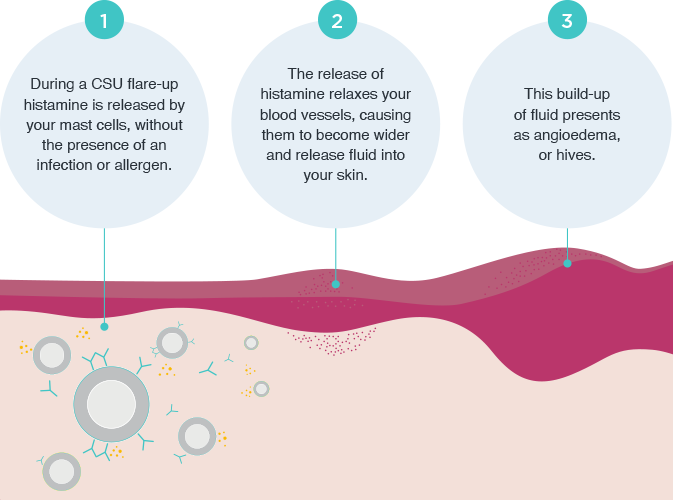
The trigger for chronic spontaneous urticaria (CSU) is usually not known. What is known is that the itching, hives and angioedema related to CSU are caused by raised levels of histamine. Histamine is a chemical that is released by mast cells - a special type of white blood cell that makes up part of your immune system. Histamine is usually released from your mast cells in response to an infection or allergen (such as pollen).

Treating CSU
Your doctor has prescribed you Xolair for the treatment of CSU.
Xolair works by blocking a chemical called Immunoglobulin E (IgE), which is produced naturally by the body and plays a key role in causing CSU.
It is thought that Xolair works by blocking the action of IgE. A process within your body that causes histamine to be released from mast cells.


Learn how to inject Xolair at home
Although you have been fully trained by a doctor, nurse or pharmacist on how to self inject Xolair, it may seem like there is a lot to consider before you inject Xolair at home.

Additional CSU resources
Further resources that you might find useful can be found here including an Auto-injector pen instructions for preparation and use, and a guide to self-injection.


